

Emma Burleigh
January 13, 2026
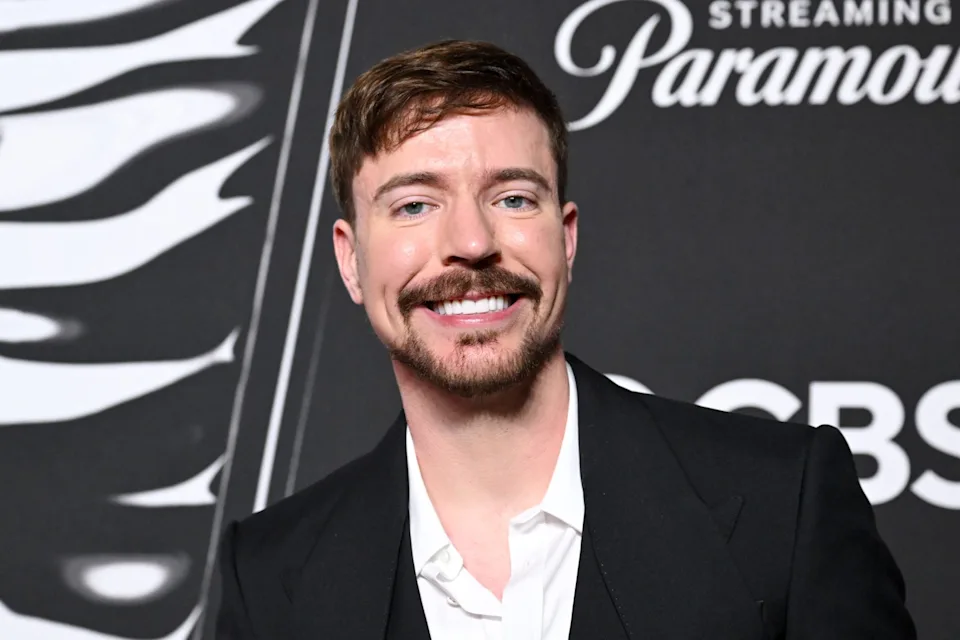
Some successful entrepreneurs sitting atop billion-dollar businesses say they may look rich on paper, but take a peek into their bank accounts, and they’re actually cash poor. Social media mogul Jimmy Donaldson, known to his 460 million YouTube followers as MrBeast, claims he’s just as broke as everyone else despite running a $5 billion entertainment empire.
“I’m borrowing money. That’s how little money I have,” Donaldson told the Wall Street Journal earlier this month. “Technically, everyone watching this video has more money than me in their bank account if you subtract the equity value of my company, which doesn’t buy me McDonald’s in the morning.”
The 27-year-old entrepreneur has said that he keeps less than $1 million for himself, despite being a billionaire and owning more than half of his $5 billion company Beast Industries. Aside from his nine-figure Amazon deal and popular YouTube channel with 107 billion lifetime views, Donaldson hit the ultra-rich club—at least on paper—from a slew of successful businesses. He’s launched ventures including multimillion-dollar chocolate brand Feastables; Lunchly, a Lunchables-esque packaged food product; MrBeast Burger, a virtual restaurant that only allows for pickup and drop-off; and production company MrBeast LLC, which helps manufacture his viral videos.
Through his assets, Donaldson is projected to be worth at least $2.6 billion—although he emphasized it’s not a fat wad of cash burning a hole in his pocket. Forbes has also estimated that his annual earnings reached $85 million between April 2024 and April 2025, a far cry from the typical American salary of $62,088 a year. However, that doesn’t mean he’s splurging on luxuries and only flying private. Donaldson claimed he’s actually in the red.
“It’s funny talking about my personal finances, because no one ever believes anything I say,” Donaldson explained. “They’re like, ‘You’re a billionaire!’ I’m like, ‘That’s net worth.’ I have negative money right now.”
“I wake up, I just work…I’m just so busy working I don’t really think about my personal bank account,” Donaldson continued. “I’m just laser-focused on making the greatest videos as possible, and building the business as big as possible.”
Why MrBeast says he’s in the red
Donaldson rakes in eight-figure earnings and runs a $5 billion business, yet still claims to be broke. So where is all of his money going? Right back into his business ventures, the YouTube star says.
“I personally have very little money because I reinvest everything (I think this year we’ll spend around a quarter of a billion on content). Ironically I’m actually borrowing $ from my mom to pay for my upcoming wedding,” Donaldson wrote on X in response to a post heralding him as the only billionaire under 30 who didn’t inherit their wealth.
New York City Mayor Zohran Mamdani’s socialist policies have often provoked the wealthy class, and this time, his plan for the residents to access discounted groceries has triggered Elon Musk, the world’s wealthiest individual.
The contrast between the two personalities is unmissable.
While Musk is a firm believer in capitalism, Mamdani believes it has proven to be a failure and only socialism can fix the American economy.
The Democrat has been highly critical of the corporate influence on politics and taken part in the “Tesla Takedown” protest to challenge the billionaire’s influence in the wake of his de facto leadership role at the Department of Government Efficiency (DOGE) during the second Donald Trump administration.
While Musk has often hailed cryptocurrencies like Bitcoin (BTC) and Dogecoin (DOGE) for offering economic independence, Mamdami—though he hasn’t articulated a clear crypto policy—sharply criticized his electoral rival Andrew Cuomo for advising a foreign crypto exchange which was facing a probe.
Mamdani’s grocery plan triggers Musk
On Aug. 3, angel investor Jason Calacanis lashed out at Mamdani’s discounted groceries plan, and Elon Musk joined the conversation on X to call the mayor “a thief and a liar.”
Grocery stores already run on low profit margins and the New York City administration is asking businesses to submit requests for proposals (RFPs) so that the government pays companies to discount groceries, Calacanis blasted Mamdami.
Responding to the post, Musk called Mamdani “a thief and a liar” and said what they’re doing won’t matter.
The tech tycoon reiterated his view that artificial intelligence (AI) and robots will be very productive, and there will be plenty of goods and services for everyone.
However, the global AI race among top countries like the United States and China could lead to the currency debasement crisis as countries print more and more fiat currency to fund the AI dreams—a concern Musk shares.
While the “fake” fiat currency can be printed endlessly, Bitcoin, based on energy, cannot be faked, Musk once argued.
There is no cap on the amount of U.S. dollar bills that can be printed, and it leads to currency debasement. But Bitcoin has a limited supply of 21 million coins, so it remains a valuable asset, Bitcoin believers like Musk claim.
Musk’s companies, Tesla (Nasdaq: TSLA) and SpaceX (Nasdaq: SPCX), hold Bitcoin on their balance sheets. While the former holds 11,509 BTC, the latter holds 18,712 BTC.
Musk personally also holds Bitcoin, his father once revealed in an interview in April this year.
At press time, Bitcoin was trading at $63,862.98.
In the earliest stages of building a business, founders may shy away from dreaming big and make conservative estimates of how successful they’ll be. But DoorDash cofounder and CEO Tony Xu is now warning entrepreneurs not to cap their ambitions, like he once did.
“I think a lot of times you kind of, as an entrepreneur, have to take the greedy algorithm,” Xu recently said on the Uncapped with Jack Altman podcast. “You have to keep going all the way and seeing if there’s more.”
It’s a lesson he’s learned when trying to secure seed funding for DoorDash in the spring of 2013. Just months after the company’s inception, with only around 150 customers and $10,000 in sales, the four cofounders submitted an application to startup accelerator Y Combinator. When asked how much they think their business could make one day, the entrepreneurs gave an estimate that seemed aspirational in the moment—but pales in comparison to how much the $87 billion giant reels in now.
“I estimated something like $100 million of revenue,” Xu continued. “Thankfully, we’re a few orders of magnitude off.”
In reality, the company reached that annual revenue in 2018—and it’s only hit the gas since. DoorDash’s first-quarter revenue this year hit a whopping $4 billion, reeling in 40 times more than their original revenue projection in just a single quarter. And its success has exploded beyond its Silicon Valley roots. Total orders across America and more than 40 other countries have also increased 27% over that same time, amounting to 933 million.
“It’s very hard as an entrepreneur when you’re working out of your apartment, to know what that size could be one day,” Xu said. “Turns out a lot of people eat food.”
Founders say it’s important to be ‘delusional’ and ‘crazy’
Founders who have launched billion-dollar businesses are being candid on the methods to their madness. Whether it be “delusional” or “crazy,” many say embracing unconventional thinking is what helped them make it big-time.
Chess.com cofounder Danny Rensch started his online empire when his life was on the brink of collapse. Although he initially believed his vision was unrealistic, he credits a bit of that self-delusion to the platform’s success. And after years of elbow grease and persistence, Rensch has scaled Chess.com as a go-to destination for digital chess and reached a $1 billion valuation in 2023. Now the beloved gameplay business hosts tens of millions of matches daily, with hundreds of millions of users tuning in from around the world.
“The idea that Chess.com could actually be what I thought it could be required me to be delusional,” Rensch told Fortune last year, referencing the same wisdom as his friend, Bonobos cofounder Andy Dunn. “The belief that you see something that doesn’t exist yet, and how delusional that is, is the requirement for every successful entrepreneur.”
Billionaire Mike Repole says that craziness is key to success. The serial entrepreneur cofounded and sold beverage companies Glaceau (Smartwater, Vitaminwater) and BodyArmor to Coca-Cola for a combined $9.7 billion. But along the way, he admitted that he “failed” multiple times; two-thirds of startups bow out within a decade, so it’s imperative that founders keep going, even when signs tell them to turn back.
“The first five years for an entrepreneur I call the survival years. Every single day, you could go bankrupt,” Repole said in an interview with the School of Hard Knocks last year. “I started crazy…Crazy people change the world.”
And he isn’t alone in his founder philosophy. George Arison, a longtime entrepreneur and CEO of the LGBTQ+ dating platform Grindr, told Fortune that being “arrogant and crazy” are prerequisites to succeed as a founder in America. Arison, who was born in the country of Georgia, owned up to being both of those things and being motivated by seemingly impossible feats. Now, Grindr boasts a market cap of $3.2 billion and is growing rapidly year over year.
“One of my motives in life is doing impossible things; that’s how I’ve shaped my life,” Arison continued at Fortune’s 2024 Brainstorm Tech conference. “My whole life is impossible. I’m now here doing this, and look at where I was born. Nothing’s actually impossible.”
Mark Cuban has never been shy about money. He sold Broadcast.com to Yahoo for $5.7 billion, spent two decades as one of the loudest owners in the NBA, and built a second act telling anyone who would listen how to get rich.
So it was notable when, pressed on whether his generic-drug company Cost Plus Drugs was really a charitable exercise, Cuban rejected the premise… and then rejected the goal most people assume every billionaire shares. “Well, I could make more money,” Cuban said during a WIRED interview, noting that Cost Plus is structured as a public benefit corporation. “But how much f*cking money do I need? You know, I’m not trying to land on Mars.” He added, unprompted: “And not to take anything away from [Elon Musk] for trying. More power to [him].”
He explained that where he is in life, if he had more money, he would probably just use that to help take on the healthcare industry in other ways.
Cuban never named anyone. The remark marks out a real fault line in how extreme wealth gets deployed. There is a version that treats each additional billion as fuel for a bigger project, whether that’s a Mars colony, a rocket company, or a bid at superintelligence. And there is a version that treats some number as sufficient and redirects the attention somewhere smaller and more immediate.
Cuban was drawing that line out loud, and placing himself on one side of it. What he redirected toward is drug pricing. Cost Plus Drugs publishes its actual acquisition cost for every medication it carries, then adds a flat 15% markup, a $5 pharmacist fee, and shipping. Cuban described growing the catalogue from 111 medications to roughly 2,500, and said the company had cut the price of at least one drug every weekday for close to 18 months.
For investors, the interesting part isn’t the philanthropy question, it’s the structural one. Cuban’s argument is that the opacity of American drug pricing is itself the opportunity, and that the incumbents’ reliable defense has been acquisition: “anybody that was a threat, they just buy them.” Cuban has made it known in the past that he isn’t for sale, and what he is trying to do isn’t for sale. Cuban hinted at this in the interview, saying, “That’s just not in the cards for us.”
Whether that structure is a genuine moat or a ceiling on returns is the open question, and Cuban is betting his own capital on the former. The wider signal is about billionaire behavior generally. When someone with Cuban’s balance sheet says plainly that he has enough, it is worth asking what that implies about how the very wealthy actually allocate attention and whether accumulating more is the objective function everyone assumes it is.
In October 2025, the internet absolutely erupted after Odell Beckham Jr. said a $100 million contract can’t last forever, during an episode of The Pivot Podcast (1). Now, former NBA star and Hall of Famer Carmelo Anthony has decided to chime in with a similar take.
“That’s $100 million, but it’s not really $100 million over a five-year span,” the Knicks legend said on the 7PM in Brooklyn (2) podcast, noting that fans were probably unaware of how brutal state and local taxes can be, especially in a city like New York.
“You’re talking 58 percent to 60 percent or 48 percent, half your check,” Anthony said. “So that 10 [million] goes to 5 [million] over five years. And within that five, you’ve got other taxes you gotta pay.”
Must Read
Jeff Bezos backs a platform that lets anyone invest in rental homes for as little as $100 — 6 ways to build wealth like a landlord without actually being one
JPMorgan still sees gold hitting $5,000/oz by Q4 — and savvy investors are protecting their wealth with a tax-advantaged Gold IRA. Learn more with a free guide from Priority Gold
The tax breaks in Trump’s ‘big beautiful bill’ expire after 2028 — and experts say most people won’t act in time. What to do before the window closes
Even if it’s heavily taxed, $50 million or so would still be considered “generational wealth” by many fans. However, Anthony highlights another critical financial drain that many high-income people face: lifestyle creep.
Here’s how lifestyle creep impacts more people than you might think, as well as some tips for building generational wealth without ever having to lace up your sneakers.
‘You’ve gotta live’
Although taxes and fees are brutal enough, the sudden shift to a high-profile lifestyle that comes with a big windfall is often the “gray area that f—- a lot of athletes up,” Anthony said.
“You’ve gotta live,” he said. “You gotta get a house, take care of your moms, you got your agency fee, all this s— happening within that $5 million.”
In other words, any amount of money, whether it’s multiple millions or billions, is insufficient for financial freedom if you plan to spend more than you’ve got.
Lifestyle creep is the silent killer of generational wealth accumulation, and it even starts showing up in the six-figure club. In fact, 25% of U.S. adults earning between $100,000 and $200,000 a year said they were living paycheck to paycheck, according to a 2025 Goldman Sachs report (3) — but that ratio jumped to 40% for those earning more $500,000.
Simply put, the key to financial freedom and long-term security might not just be earning more money. It might also be about spending your money less and optimizing your income more.
A three-pronged approach to building wealth
If you’re trying to accumulate a generational fortune, you might want to start by refining your approach to what you already have — through monitoring your spending habits, reassessing your investment assets and developing your tax strategy.
Neglect any one of these elements and you could fall short of the target.
For spending habits, building up willpower and writing a concrete budget are always helpful. But you can go a step further: If you find it difficult to stop overindulging, you can start by building savings habits into everyday spending.
With Acorns, you can automatically invest spare change from your everyday purchases into a diversified portfolio of ETFs managed by experts at leading investment firms like Vanguard and BlackRock.
Build wealth through real estate
Platforms like mogul can also help you build wealth in the asset class preferred by many of the world’s wealthiest families: real estate. This real estate investment platform offers fractional ownership in blue-chip rental properties, which gives investors monthly rental income, real-time appreciation and tax benefits — without the need for a hefty down payment or late-night tenant calls.
Founded by former Goldman Sachs real estate investors, the mogul team handpicks the top 1% of single-family rental homes nationwide for you. Put simply, you can invest in institutional-quality offerings for a fraction of the usual cost.
Each property undergoes a vetting process, requiring a minimum 12% return even in downside scenarios. Across the board, the platform features an average annual IRR of 18.8%. Their cash-on-cash yields, meanwhile, average between 10% to 12% annually. Offerings often sell out in under three hours, with investments typically ranging between $15,000 and $40,000 per property.
Level it up with multifamily properties
To level up your property investments with niche assets, you could also leverage multifamily real estate investing. In a report (4) prepared by JPMorgan, Al Brooks — the firm’s vice chair of Commercial Banking — said, “I think multifamily housing is absolutely where you want to be as an investor.”
Accredited investors can now tap into this opportunity through platforms such as Lightstone DIRECT, which gives accredited investors access to single-asset multifamily and industrial deals.
Lightstone DIRECT’s direct-to-investor model ensures a high degree of alignment between individual investors and a vertically-integrated, institutional owner-operator — a sophisticated and streamlined option for individual investors looking to diversify into private-market real estate.
With Lightstone DIRECT, accredited individuals can access the same multifamily and industrial assets Lightstone pursues with its own capital, with minimum investments starting at $100,000.
Take a hands-off, tax-efficient approach
Finally, if you’re as worried about taxes as Anthony and Beckham Jr., hiring a professional advisor can help you invest in the most tax-efficient way. And if you prefer a hands-off, tech-forward approach to building wealth, Vanguard’s Digital Advisor puts the investing expertise of one of the world’s largest asset managers right at your fingertips.
It takes the guesswork out of investing by building a personalized portfolio for you using Vanguard’s well-known low-cost ETFs and mutual funds — then keeps things running smoothly with automatic rebalancing.
The platform also offers guidance on saving for retirement and lets you set additional goals as your life evolves. It can even help you think through debt repayment strategies, potentially freeing up more cash to invest toward your long-term plans.
With a minimum investment of just $100, it’s an easy way to get started with professionally guided investing. And for every $10,000 in an all-index portfolio, you’ll only pay approximately $15 to $16 per year.*
Plus, you can test-drive the Vanguard experience with no advisory fees for the first 90 days.
*All investing is subject to risk, including the possible loss of the money you invest.



Leave a Reply